who we are
Collaborating and building partnerships.
The Bay Area One Water Network is a network of parties in the Bay Area with interests in an integrated, or One Water, approach to urban water management, including drinking water, wastewater, on-site and municipal recycled water, stormwater, and flood control. The Bay Area One Water Network is a collaborative effort of the San Francisco Estuary Partnership and numerous Bay Area water utilities, agencies, cities, and counties. It is funded by the US Environmental Protection Agency and the Bay Area Clean Water Agencies.
what we do
Advancing One Water solutions.
We collaboratively develop and collectively advance an evolving roadmap of initiatives to fill critical gaps, build essential capacities, and implement One Water solutions.
We host workshops and seminars to increase understanding of One Water solutions and convey shared priorities to decision-makers and people affected by decisions about water management.
We facilitate joint fact-finding activities, collaborative planning and problem solving, and cross-jurisdictional One Water project implementation.
We report and maintain information on critical gaps, cases studies, and lessons learned for advancing regional One Water initiatives.
our story
Transforming our water systems.
In 2019, the National Science Foundation’s Engineering Research Center for Reinventing Urban Water Infrastructure (ReNUWIt)—a consortium of universities that was led by researchers at Stanford and UC Berkeley—engaged with local utilities, engineers and regulators to establish the Bay Area One Water Network. After the ReNUWIt project ended in 2022, the San Francisco Estuary Partnership took the lead in convening the Bay Area One Water Network.
In 2019, the Bay Area One Water Network held two in-person workshops: one focused on stormwater capture and use, and the other on water recycling. The workshops were designed to identify regional challenges and opportunities, to identify synergies among existing efforts, and to strengthen working relationships among the participants. We published two reports that documented the discussions and conclusions from each of the workshops: “Stormwater Capture to Augment Water Supplies in the San Francisco Bay Area: Challenges, Opportunities, and Next Steps” and “Advancing Water Reuse in the San Francisco Bay Area : Integrating Water Reuse into A Regional Approach to Water Management”. In 2020 during the COVID-19 pandemic, we pivoted to an online format and held free, publicly accessible webinars reporting out on the 2019 workshops and reports to broaden their reach among practitioners. We also held an online webinar about next steps for the Bay Area One Water Network, which provided foundational information on potential workshop opportunities that would be particularly relevant in the Bay Area going forward.
In 2021, the One Water Network collaborated with the San Francisco Estuary Partnership to host a roundtable discussion on nature-based solutions for shoreline resilience. The workshop identified key next steps for advancing nature-based solutions that could provide multiple benefits for water quality, wildlife habitat and shoreline access, and climate resilience and resulted in a report, “Nature-Based Solutions for Coastal Resilience, Habitat Enhancement, and Water Quality Improvement.”
In 2022, we held a workshop on advancing water conservation while improving water affordability in the San Francisco Bay Area, and in 2023 we held a workshop to explore potential opportunities for and barriers to brackish water desalination in the Bay Area, with a focus on intersections of healthy ecosystems and disposal of reverse osmosis concentrate. These workshops resulted in two reports, “Paths for Equitably Advancing Water Conservation in the San Francisco Bay Area” and “Unlocking Water Resources in the Bay Area with Advanced Water Treatment Technologies.”
In September 2025, we held a convening to develop a strategic roadmap for the One Water Network. Stay tuned for details!
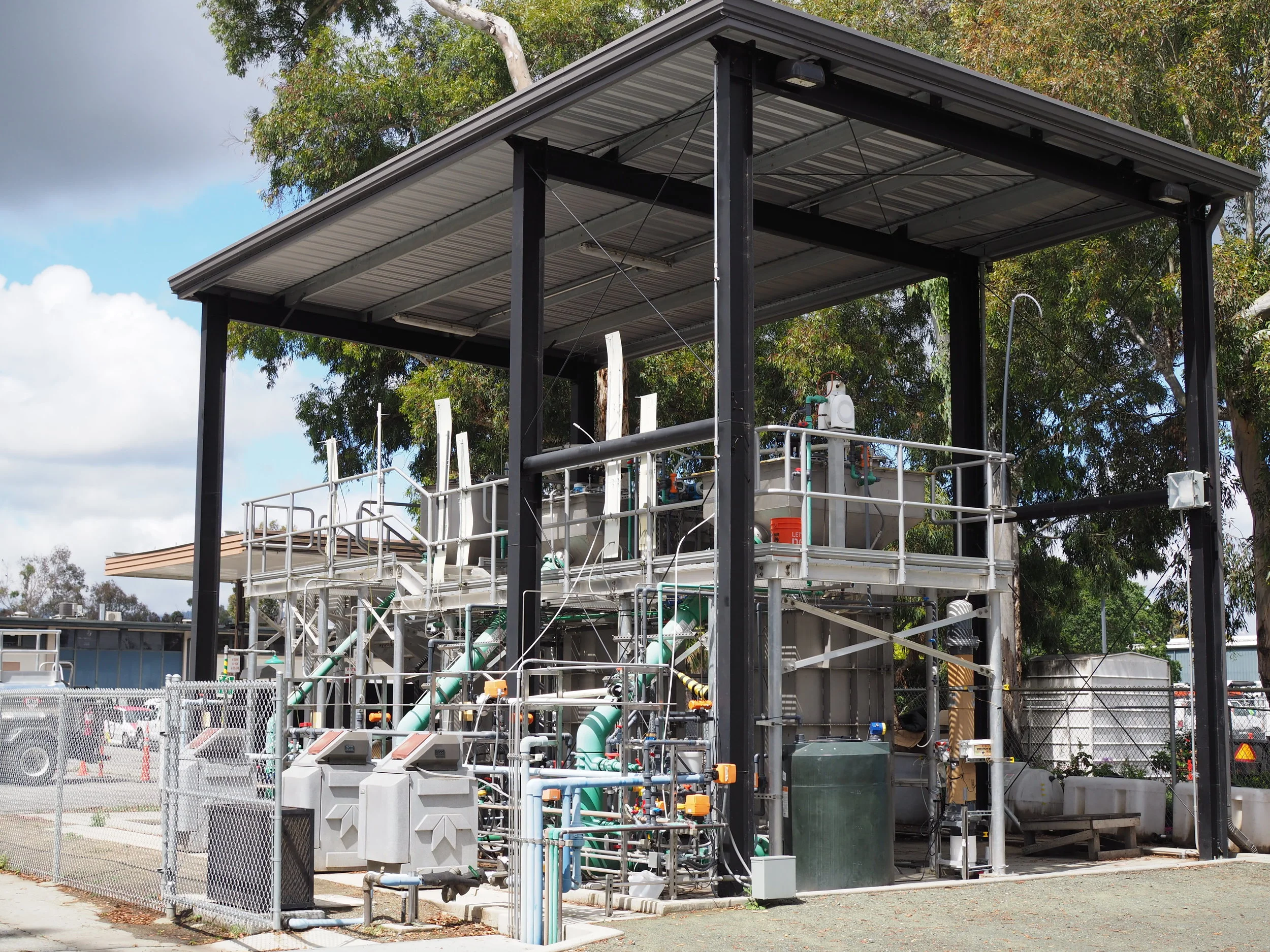
The Codiga Resource Recovery Center at Stanford University enables pilot testing of technologies to recover clean water, nutrients and energy from wastes.
Sponsors
Staff
Sasha Harris-Lovett, San Francisco Estuary Partnership
Mark X. Jacobs, Mark X. Jacobs Consulting
Natalie Rossi, San Francisco Estuary Partnership
Planning team
Hossein Ashktorab, Valley Water
Reid Bogert, San Mateo City / County Association of Governments
Lorien Fono, Bay Area Clean Water Agencies
Paula Kehoe, San Francisco Public Utilities Commission
Caroline Koch, WaterNow Alliance
Melody LaBella, Central Contra Costa Sanitary District
Jan Lee, Dublin San Ramon Services District
Felicia Marcus, Stanford
Tom Mumley, retired from San Francisco Water Quality Control Board
David Sedlak, UC Berkeley
Medi Sinaki, Valley Water
Dave Smith, Water Innovation Solutions
Luisa Valiela, Environmental Protection Agency
Ian Wren, BayKeeper
Jackie Zipkin, East Bay Dischargers Authority
In memoriam: Dick Luthy, Stanford
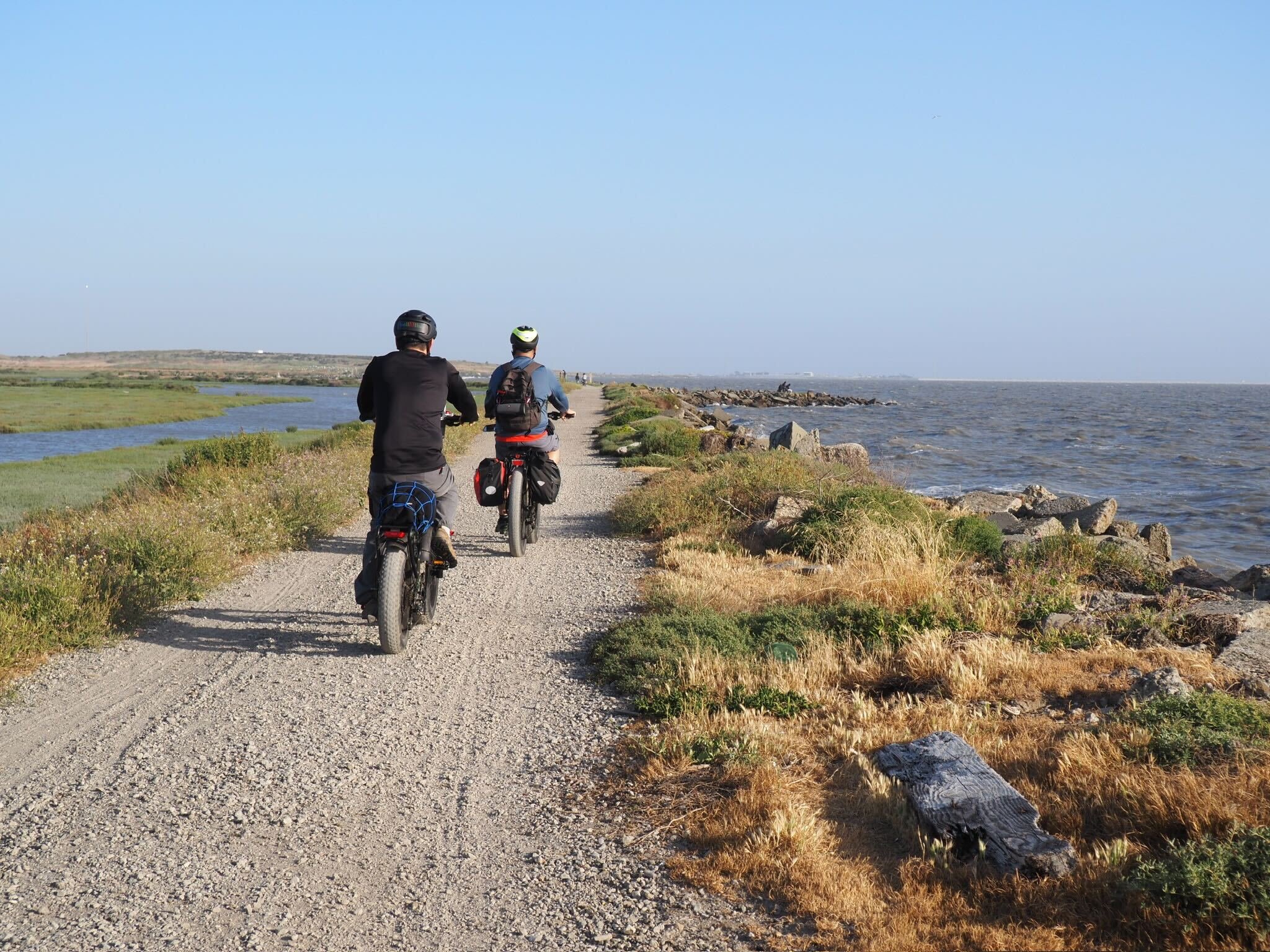
Photo credit: Alex Thomsen